The artificial intelligence boom from 2023 to 2026 has become one of the most important financial stories in modern history. In just a short period, artificial intelligence has shifted from an emerging technology trend into a core driver of global equity markets, corporate strategy, and capital allocation.
The result has been extraordinary. Trillions of US Dollars in market value have been created as investors continue to pour capital into companies leading the artificial intelligence revolution.
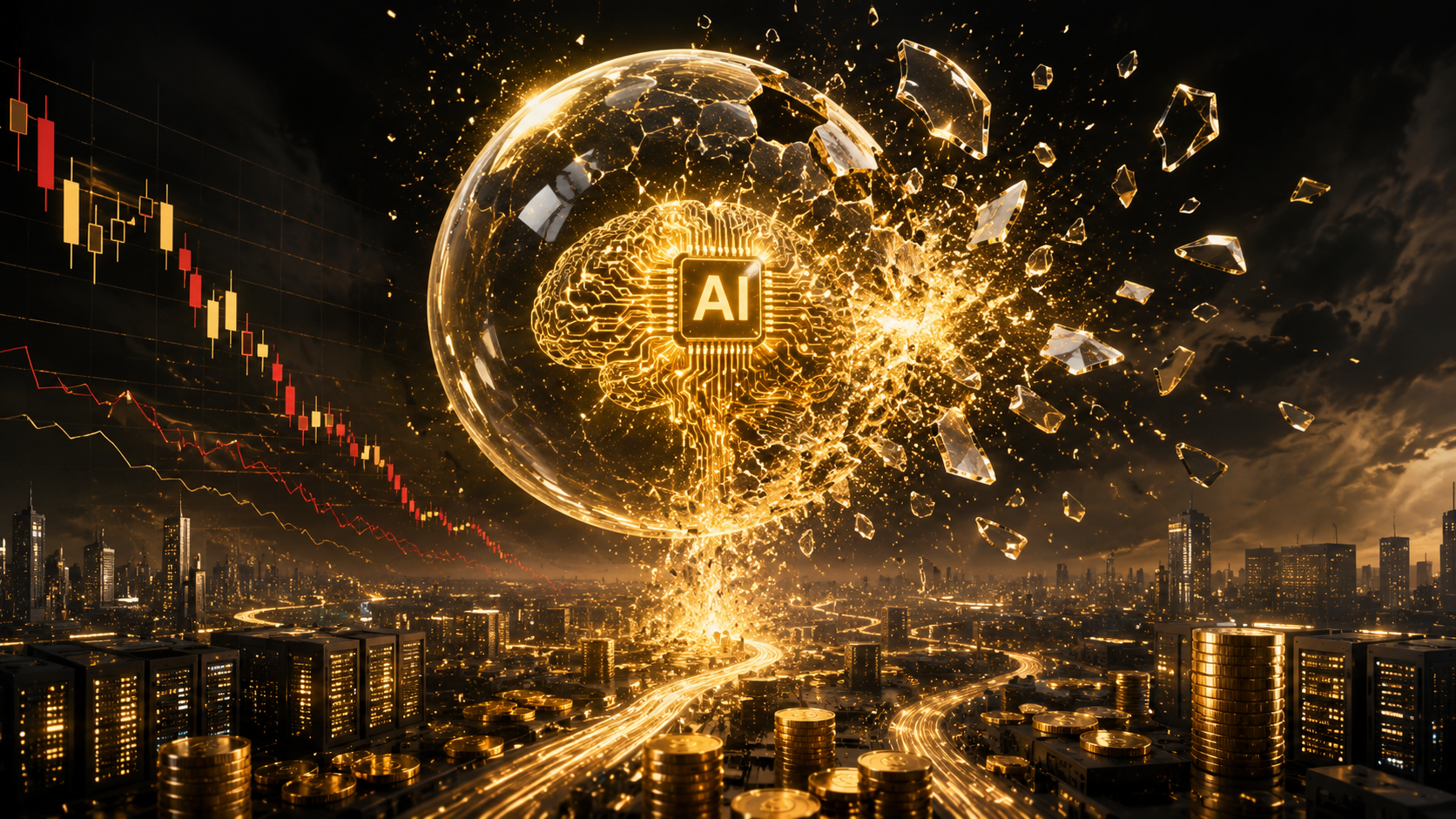
However, behind this rapid expansion sits a growing and uncomfortable question. Is artificial intelligence a true technological supercycle, or is the market already building a financial bubble inside a real innovation cycle?
The answer is not simple. Artificial intelligence does not resemble the pure speculative excess of the dot-com era in 2000. At that time, many companies had little to no earnings and weak demand. In contrast, artificial intelligence today is supported by real revenue, real customers, and real adoption.
Even so, the market is showing several late-cycle characteristics. These include extreme capital spending, high market concentration, and a widening gap between investment levels and monetization.
A Massive Capital Spending Wave Led by Big Tech
The artificial intelligence investment cycle is being driven by some of the world’s most powerful companies.
Microsoft (NASDAQ: MSFT), Amazon (NASDAQ: AMZN), Alphabet (NASDAQ: GOOGL), and Meta Platforms (NASDAQ: META) are spending at record levels to build data centers, expand cloud infrastructure, and secure advanced semiconductor supply. At the center of this ecosystem are Nvidia (NASDAQ: NVDA), AMD (NASDAQ: AMD), TSMC (NYSE: TSM), and Broadcom (NASDAQ: AVGO), which provide the hardware backbone for artificial intelligence systems.
The scale of investment is enormous. Annual spending is now measured in hundreds of billions of US Dollars. In several areas, capital expenditures tied to artificial intelligence are increasing faster than near-term revenue growth.
This creates what is known as a capex first cycle. In this structure, companies invest heavily in infrastructure first and generate profits later.
This is not unusual in major technological transformations. Railroads, electricity networks, and the early internet all required massive upfront investment before long-term returns became visible.
However, there is an important distinction. Some infrastructure cycles create lasting economic foundations. Others overshoot and correct sharply before stabilizing.
Artificial intelligence may currently be positioned somewhere between these two outcomes.
Why Is This Not The Year 2000 Again
One of the strongest arguments against calling artificial intelligence a bubble is the financial strength of its core companies.
NVIDIA is at the center of global demand for artificial intelligence hardware. Microsoft, Amazon, and Google are integrating artificial intelligence directly into cloud services and enterprise software platforms.
These are not speculative companies. They generate strong cash flow, have established customers, and operate profitable global businesses.
This is a major difference compared to the dot-com era in 2000, when many companies had no earnings and limited real demand.
In 2026, artificial intelligence will already be reflected in financial performance. It is being used across software development, cloud automation, advertising systems, logistics networks, and customer service operations.
The productivity impact is measurable. Companies are reporting faster coding cycles, improved targeting efficiency, reduced operational costs, and increased automation.
This matters because financial bubbles typically form when there is a disconnect between narrative and economic reality. In this case, artificial intelligence is already embedded in real economic activity.
NVIDIA Becomes the Center of the Entire Market Narrative
NVIDIA has emerged as the most important company in the artificial intelligence ecosystem.
It functions as a real-time indicator of global demand for artificial intelligence infrastructure. Its earnings reports influence not only its own stock price but also the stock prices of semiconductor companies, cloud providers, and broader equity market sentiment.
Options markets regularly price large valuation swings around Nvidia earnings announcements. This reflects both strong confidence in demand and extreme sensitivity to future expectations.
This type of market behavior is usually associated with companies that sit at the center of major economic narratives.
The Growing Bear Case and Rising Risk Signals
Despite strong fundamentals, several warning signs are becoming more visible.
One concern is circular financing within the artificial intelligence ecosystem. Hyperscale cloud providers fund startups. Those startups then spend heavily on cloud services provided by the same hyperscalers. Semiconductor demand is also tied to this same spending cycle.
This structure can make demand appear stronger than it actually is.
Another concern is the gap between capital spending and monetization. Artificial intelligence infrastructure is expanding rapidly, but many business models are still in early stages. In several cases, revenue generation has not yet caught up with investment levels.
This creates a situation in which companies build first and attempt to justify returns later.
Debt is also increasing across parts of the technology sector. Some estimates suggest that total borrowing related to the expansion of artificial intelligence could reach hundreds of billions of US Dollars annually. At the same time, free cash flow margins may come under pressure as spending continues to rise.
Speculation is also increasing in smaller companies. Many firms are rebranding themselves around artificial intelligence despite having weak or unclear business models. This has led to wide valuation differences between companies with similar fundamentals.
This combination of factors is often associated with late-cycle market behavior.
The Bull Case Artificial Intelligence is Real Infrastructure
Despite these risks, the long-term investment case remains strong.
Artificial intelligence is not just a market theme. It is becoming a foundational layer of global digital infrastructure.
It is already integrated into cloud computing systems, semiconductor manufacturing, enterprise software platforms, and data-driven industries.
This makes it similar to previous infrastructure revolutions such as electricity networks and railroads. Those cycles also experienced periods of overinvestment and speculation. However, they ultimately reshaped entire economies.
Artificial intelligence appears to be following a similar long-term path.
Corporate earnings also remain strong. Technology companies continue to be major contributors to overall market growth. Artificial intelligence adoption is increasing across industries and is no longer limited to experimental use cases.
The most important point is that companies are already paying for these services. Artificial intelligence is delivering real productivity improvements in business operations.
These include faster software development, more efficient marketing systems, improved logistics planning, and scalable customer support.
The Most Dangerous Risk is Market Concentration
One of the most important structural risks in 2026 is concentration.
Roughly 40 percent of the S&P 500 index weight is concentrated in a small group of large technology companies. This means that artificial intelligence is no longer a sector-specific trade. It is embedded in global investment portfolios, pension funds, and passive index products.
This creates systemic exposure.
In earlier cycles, weakness in technology stocks mainly impacted a narrow group of investors. Today, a correction in artificial intelligence leaders would affect a much larger portion of the financial system.
This increases the potential impact of any market downturn.
A Deeply Divided Investor Landscape
Investor sentiment around artificial intelligence is sharply divided.
The bullish perspective argues that artificial intelligence represents a historic industrial revolution that will reshape productivity and justify current valuations over time.
The bearish perspective argues that markets are pricing near-perfect execution, while capital expenditure cycles often overshoot real demand before correcting.
Observable data support both perspectives. This is why the debate has become so intense.
The disagreement is not about whether artificial intelligence is important. It is about timing, monetization speed, and whether current valuations already reflect too much future growth.
Why Do Analysts Call It A Partial Bubble
The most accurate description of the current environment is a partial bubble.
Strong fundamentals underpin the market. Companies such as Nvidia, Microsoft, Amazon, and Google are supported by real demand and strong financial performance.
At the same time, speculative excess is evident in smaller companies and in firms that rely heavily on artificial-intelligence branding without clear differentiation.
This creates a fragmented market structure where strength and speculation coexist.
Historically, this type of uneven buildup often precedes periods of correction or valuation reset.
What Could Trigger A Market Repricing
Several potential catalysts could shift market direction.
A slowdown in capital expenditure by major cloud providers could immediately change growth expectations.
Earnings disappointments from key companies such as Nvidia or major semiconductor firms could also trigger a reassessment of valuations.
Higher interest rates could reduce the value of future growth and place pressure on technology stocks.
Finally, if artificial intelligence revenue growth does not keep pace with infrastructure investment, investors may begin to reassess long-term assumptions.
Any one of these factors could lead to a repricing event. Taken together, they could trigger a broader market correction.
Final Verdict For Investors in 2026
Artificial intelligence is not a traditional financial bubble.
The technology is real. Earnings are real. Adoption is expanding across industries. Infrastructure is being built at scale.
However, risks remain significant. Capital spending is accelerating rapidly. Market concentration is extreme. Monetization is still developing in many areas.
The most important risk is not collapse. The most important risk is that growth may not match current expectations.
In financial markets, that gap alone can drive major valuation changes across trillions of US Dollars.