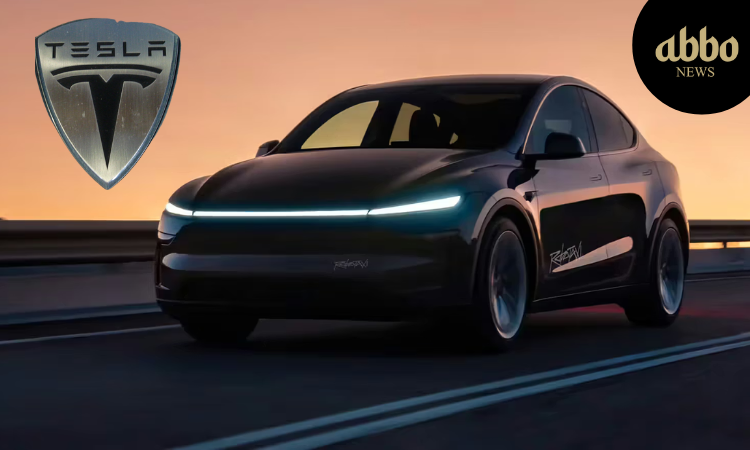
Tesla (NASDAQ: TSLA) is emerging as a leading force in the Robotaxi market, according to analysis from NewStreet Research.
The assessment highlights Tesla’s cost structure and fleet strategy as key advantages over rivals, setting the stage for what could be a significant shift in autonomous ride-hailing.
Analyst Backs Tesla’s Capital Efficiency
NewStreet Research analyst Pierre Ferragu argued that Tesla operates far more efficiently than its competitors.
Speaking during a recent interview with influencer Farzad Mesbahi, Ferragu estimated that Tesla’s Robotaxi model could be roughly seven times as capital efficient as its peers.
To underscore his point, Ferragu contrasted Tesla with Waymo, Alphabet’s (NASDAQ: GOOGL) autonomous driving subsidiary. While Waymo has made notable technological strides, Ferragu said the company continues to face high operating costs. In fact, he noted that Waymo’s cost per mile currently exceeds Uber Technologies Inc. (NYSE: UBER), raising questions about its long-term economic viability.
Cost Structure Favors Tesla
Ferragu’s research suggests that Tesla’s advantage is not merely strategic but structural. A key differentiator, he said, lies in Tesla’s simpler hardware approach. Unlike Waymo, which relies on a complex array of sensors, including lidar, Tesla’s vehicles use a more streamlined sensor suite. This design choice helps reduce manufacturing expenses without compromising scalability.
Beyond hardware, Tesla also benefits from its massive production scale. Because the company already operates one of the world’s most advanced electric-vehicle manufacturing ecosystems, it can leverage its existing infrastructure to support a Robotaxi rollout. Together, these factors meaningfully lower the capital burden of deploying an autonomous fleet.
Owner-Based Fleet Seen as Strategic Advantage
Building on this, Ferragu pointed to Tesla’s proposed owner-participation model as a major differentiator. Under this plan, Tesla owners could opt to add their personal vehicles to the Robotaxi network during periods of high demand, effectively turning privately owned cars into revenue-generating assets.
Ferragu said this model could significantly reduce Tesla’s need to own and operate every vehicle in its network. Consequently, the company’s upfront investment requirements would likely remain far lower than those of competitors pursuing traditional fleet ownership. He also noted that the concept aligns with earlier public statements from CEO Elon Musk, who has long suggested that Tesla owners could play a role in the company’s autonomous ride-hailing strategy.
Uber’s Path Through Partnerships
Against this backdrop, Ferragu also weighed in on how Uber might respond to Tesla’s potential dominance. Rather than attempting to build its own autonomous fleet from scratch, he suggested that Uber’s best path forward lies in strategic partnerships with existing self-driving companies.
He cited examples such as Baidu-backed (NASDAQ: BIDU) Apollo Go Robotaxi services in London, and Waymo’s planned or ongoing integration in Atlanta. These collaborations, Ferragu argued, could allow Uber to expand its autonomous offerings without bearing the full cost of vehicle ownership and maintenance.
Musk Highlights Hardware and AI Roadmap
In a related development, Elon Musk recently provided an update on Tesla’s progress in self-driving technology. He said vehicles equipped with the AI4, or HW4 chip, are capable of supporting unsupervised Full Self-Driving. He added that no additional hardware upgrades would be required.
Musk also confirmed the revival of Tesla’s Dojo initiative, unveiling plans for the new Dojo3 chipset, which is designed to power advanced AI computing. He linked the project not only to autonomous driving but also to Tesla’s broader ambitions in large-scale and even space-based computing.
Free FSD Transfer Nears Deadline
Meanwhile, Tesla has clarified its policy regarding free transfers of its Full Self-Driving (FSD) software. The company announced that the offer will expire on March 31, meaning buyers must place their vehicle orders by that date to qualify.
However, Tesla emphasized that the delivery need not occur before the deadline. As long as the order is placed on time, customers remain eligible for the transfer. The company communicated the update directly to prospective buyers.
Despite these developments, Tesla shares (NASDAQ: TSLA) moved lower in early morning trading. The stock fell 2.90% to $428.70 on Tuesday, though no specific catalyst for the decline was identified.
Insight: Why the Robotaxi Debate Matters
The broader discussion around Robotaxis reflects a fundamental shift in transportation economics. Traditional ride-hailing models depend on human drivers, which inherently limits scalability and compresses margins. Autonomous fleets promise lower operating costs, but only if companies can manage the capital required to deploy and maintain them.
In this context, Tesla’s proposed model challenges the prevailing assumption that autonomous ride-hailing requires massive, company-owned fleets. By leveraging existing vehicle owners, Tesla could distribute risk, reduce fixed costs, and accelerate deployment.
Analysts like Pierre Ferragu see this as a structural advantage rather than merely a technological one. By contrast, rivals such as Waymo have prioritized tightly controlled, company-owned fleets, which may deliver greater consistency but at a significantly higher cost.
Uber’s partnership-based approach sits somewhere in between. It avoids direct vehicle ownership while still enabling participation in the autonomous ecosystem through collaboration.
As these strategies evolve, investors are focusing less on flashy tech milestones and more on cost efficiency, scalability, and real-world deployment — the factors that will decide the Robotaxi race.