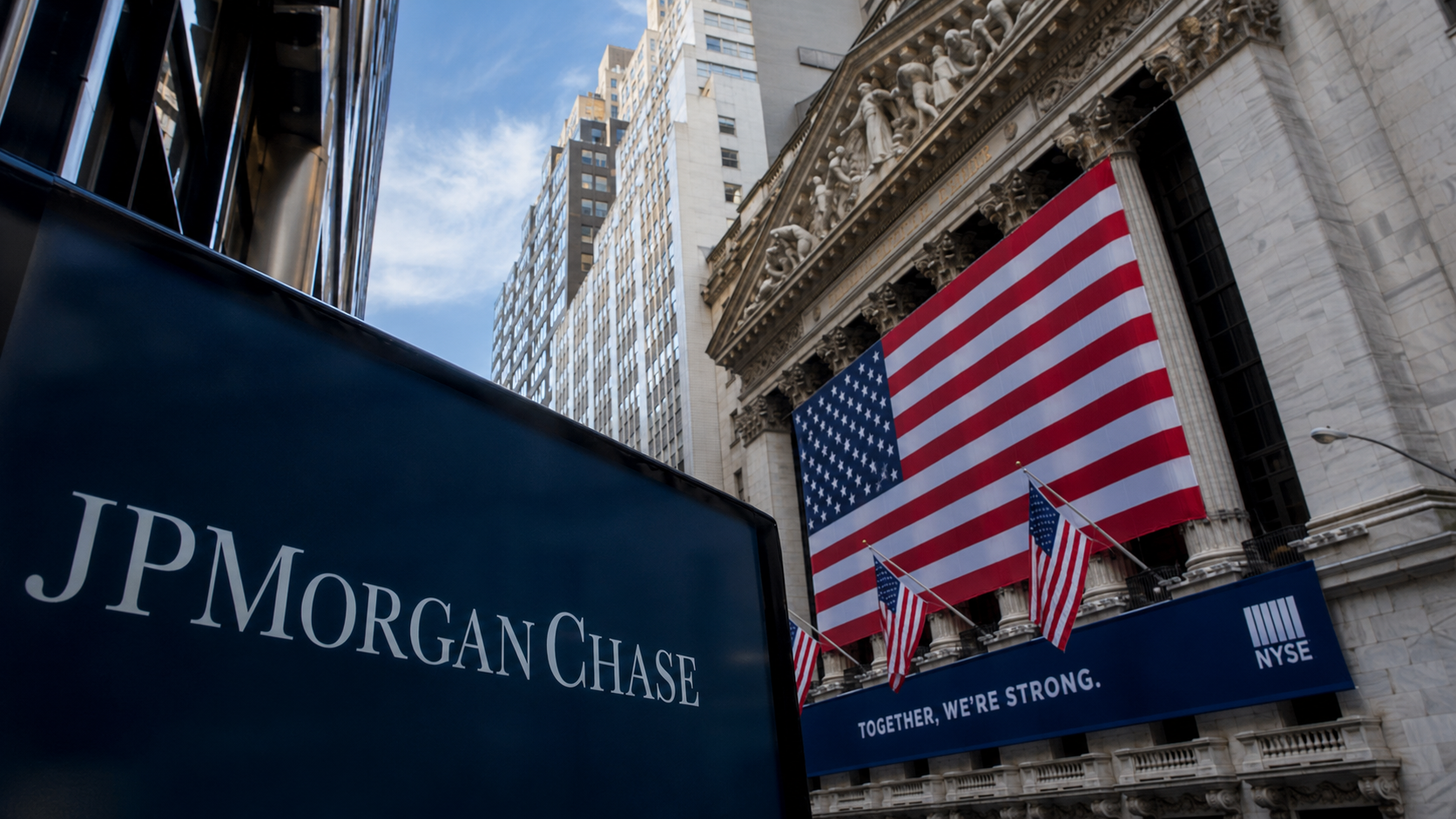
Wall Street’s biggest banks officially launch the second-quarter earnings season on Tuesday, with JPMorgan Chase (NYSE: JPM), Bank of America (NYSE: BAC), Citigroup (NYSE: C), Wells Fargo (NYSE: WFC) and Goldman Sachs (NYSE: GS) all reporting before the opening bell in a rare “Super Tuesday” for financial markets. The reports are expected to provide one of the clearest early indicators of U.S. economic health, from consumer spending and corporate borrowing to capital markets activity and credit quality.
Unlike in previous quarters, expectations are already elevated. The S&P 500 has gained about 10.8% year to date, while the KBW Nasdaq Bank Index has risen roughly 14.7%, reflecting renewed optimism for financial stocks as dealmaking recovered and recession fears eased.
Consensus Estimates Suggest Another Solid Quarter
Wall Street expects widespread earnings growth among the largest U.S. lenders, although estimates vary slightly across data providers. According to FactSet, consensus expectations are:
| Bank | Consensus EPS | Consensus Revenue |
|---|---|---|
| JPMorgan Chase | $5.59 | $51.09B |
| Bank of America | $1.13 | $30.78B |
| Citigroup | $2.74 | $23.74B |
| Wells Fargo | $1.72 | $21.86B |
| Goldman Sachs | $14.51 | $16.23B |
Meanwhile, S&P Global Visible Alpha shows analysts have revised estimates higher for several banks over the past month, particularly JPMorgan, reflecting growing confidence ahead of earnings.
1. Can Loan Growth Continue Without Weakening Credit Quality?
Higher interest rates have supported bank profitability over the past two years, but investors now want evidence that loan growth remains healthy without a corresponding rise in credit losses.
Management commentary on commercial lending, consumer borrowing, credit card delinquencies, and charge-offs will be closely scrutinized. Healthy loan demand combined with stable credit metrics would reinforce the view that the U.S. economy remains resilient despite elevated borrowing costs. Conversely, signs of deteriorating credit quality could weigh on financial stocks and broader market sentiment.
2. Is the Investment Banking Recovery Sustainable?
Capital markets are expected to be one of the strongest contributors to second-quarter results.
According to MarketWatch, citing Wall Street analysts, investment banking revenue is projected to increase 10% to 20% year over year, supported by stronger mergers and acquisitions, debt issuance, and equity underwriting. Elevated market volatility is also expected to boost trading revenue across the major banks.
However, not every research firm believes the rally has further to run.
Oppenheimer recently downgraded Goldman Sachs and Morgan Stanley, arguing that investment banking is entering a later stage of its recovery cycle and that much of the expected improvement is already reflected in valuations. The firm also became more cautious on Citigroup and Bank of America, while highlighting U.S. Bancorp and PNC Financial Services as more attractive commercial banking opportunities.
3. Which CEOs Sound the Most Confident?
Quarterly earnings calls often reveal more than the financial statements themselves.
Investors should compare executive commentary on:
- Consumer spending.
- Commercial loan demand.
- Deposit pricing.
- Commercial real estate.
- Small-business confidence.
- Credit quality.
- Capital markets activity.
Differences in tone between JPMorgan CEO Jamie Dimon, Citigroup CEO Jane Fraser, Bank of America CEO Brian Moynihan, Wells Fargo CEO Charlie Scharf, and Goldman Sachs CEO David Solomon may ultimately have a greater influence on investor sentiment than headline earnings per share.
4. Have Bank Stocks Already Priced In Good News?
Several of Wall Street’s largest banks have already delivered solid gains in 2026, reflecting improving sentiment toward the financial sector ahead of earnings season.
| Bank | 2026 YTD Performance |
|---|---|
| Citigroup | +21.7% |
| Goldman Sachs | +21.1% |
| Bank of America | +9.5% |
| JPMorgan Chase | +5.8% |
Those gains suggest expectations are already elevated, particularly for Citigroup and Goldman Sachs, whose shares have outperformed many of their large-bank peers this year. Consequently, investors may demand more than just earnings beats. Management guidance on loan growth, net interest income, capital markets activity, and capital returns is likely to play a larger role in determining how shares react after the results.
5. Can Banks Keep the Bull Market Alive?
The broader significance of Tuesday’s reports extends well beyond the financial sector.
Banks are among the first large-cap companies to report each quarter, making their results an early barometer for corporate America. Strong earnings and confident outlooks would reinforce expectations for continued economic expansion and could support sentiment heading into reports from technology, industrial, and healthcare companies later this week.
Conversely, cautious guidance on loan demand, credit quality, or business investment could challenge one of the key assumptions underpinning the current equity rally.
Why Investors Should Care
This earnings season is less about whether banks beat consensus estimates and more about whether management teams can justify current valuations.
Investors will be looking for evidence that loan growth remains healthy, credit quality is stable, investment banking activity continues to recover, and higher funding costs are not materially eroding profitability.
If executives broadly reinforce the narrative of resilient consumers, improved corporate activity, and healthy capital markets, financial stocks could continue leading the market. If not, the first major earnings week of the quarter may reset expectations for the rest of the reporting season.